

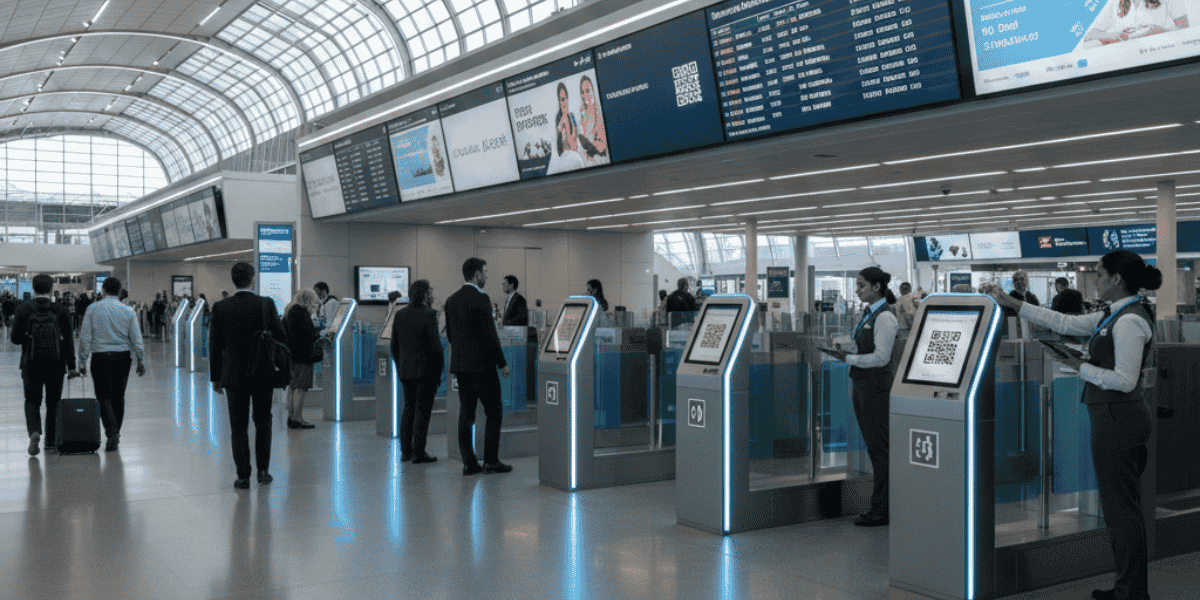
Finally, individuals can travel after a long hiatus and many restrictions. As a result, airports will once again become overcrowded. There will be thousands of travelers, as well as seers and welcomers. Obviously, there are hazards and restrictions in the existing situation, but with the QR code generator, airports may provide customers with safer and more convenient settings.
Why do airports actively employ QR codes?
QR codes may be used for everything from checking into a flight to obtaining detailed information about services. On the one hand, adopting QR codes demonstrates the airport management's concern for each passenger while simultaneously simplifying and expediting necessary operations.
Today, airports and airlines that work with them put passenger safety first. As a result, airport management prefers to use modern contactless technology, which can produce a QR code from any link, image, or file, rather than outmoded and hazardous means of interacting with passengers. This is reason #1; however, there are several more QR code benefits.
How does QR code airport check-in work?
QR code airport check-in transforms the traditional check-in procedure by allowing travelers to complete their check-in online and get a QR code on their mobile devices. This QR check-in method allows travelers to bypass actual check-in counters, cutting wait times and congestion. When travelers arrive at the airport, they just display their QR code at specified kiosks or checkpoints, where it is swiftly read to confirm their identification and flight details, expediting the entire check-in procedure.
The usage of QR codes at airport check-in improves efficiency and convenience for both passengers and airport workers. The flying QR code may be utilized at a variety of phases, including security checks and boarding gates, to provide a smooth and efficient travel experience.
Examples of popular QR codes for airports
The possibilities for interactive QR code applications are infinite. A QR code can be generated for a variety of purposes, including amusement, advertising, personal use, and business. Among the various benefits of QR technology for airports, the top five most popular solutions for passengers need special attention.
1. Safely informing
The epidemic has taught many individuals to avoid touching items and surfaces in public settings. Using a QR code generator, you may create an infinite number of QR codes that encode the information you want, such as the QR code for luggage wrapping or contactless check-in. This method will allow passengers to maintain social distance and prevent needless interaction.
2. Advertising for products and services
The airport provides a variety of chances for both online and offline marketing. However, because many individuals are in a rush or preoccupied with their personal lives, they just do not have time to learn more about your offer. You may use a QR code to advertise a business or establishment so that passengers can look up the information later.
3. QR Code for Wi-Fi
The ability to access the Internet at the airport is standard. However, network names can be confusing, and consumers may be unsure which network to connect to. Display QR codes conspicuously in each place where Wi-Fi is offered so that passengers do not connect to the wrong networks. Optionally, create a Wi-Fi QR code with a password. In this case, you can limit access to the network, preventing possible failures due to the influx of users.
4. Parking with QR code
All drivers find airport parking to be a source of frustration. If you develop QR codes for such purposes, you may substantially streamline the parking procedure, reducing waits and preventing guests from being late. You may also use the QR code to set up a payment method for parking.
5. Contact-free registration
Multifunctional QR codes provide contactless access to check-in counters and electronic boarding passes. This strategy shortens wait times, eliminates contact with others, saves paperwork, and even contributes to environmental preservation.
Benefits of Using QR Codes in Airports
The use of QR codes in air transport operations has transformed the business, delivering several benefits to both customers and airlines. QR codes are becoming increasingly important in modern aviation, from simplified check-in procedures to better security measures.
Streamlined check-in process
One of the most major advantages of employing QR codes in air travel is a more efficient check-in procedure. Using QR check-in technologies, passengers may conveniently complete their check-in online and obtain a QR code on their mobile devices. This removes the need for physical boarding passes, which reduces wait times and congestion at check-in counters.
Enhanced Airport Efficiency
QR codes at airports increase operational efficiency by allowing for faster and more accurate passenger processing. Scanning a QR code at numerous checkpoints, such as security screenings, boarding gates, and customs, guarantees that passengers travel seamlessly through the airport. This enhances the overall customer experience and enables airport workers to better manage resources.
Ticketing is secure and reliable.
QR codes on airline tickets offer a secure and dependable way to store passenger information. Each QR code contains encrypted data that can only be read by authorized individuals, protecting personal and travel information. This lowers the danger of ticket fraud and improves the overall security of the air transportation system.
Streamlined Boarding Procedures
The use of boarding QR codes makes the boarding procedure substantially easier. Passengers may show their QR codes at the gate, which are instantly checked and validated. This shortens the time spent boarding the plane, lowers delays, and enables more prompt departures.
Facilitating International Travel
QR codes for international travel are becoming crucial in controlling cross-border passenger movements. They can contain important information such as immunization records, travel history, and visa information. This enables smoother and faster processing at international crossings, making travel more convenient for passengers and efficient for customs personnel.
An environmentally friendly option.
The implementation of QR codes in air transport operations also offers environmental benefits. Airlines may reduce their environmental impact by eliminating the need for paper tickets and boarding permits. This shift to digital solutions is consistent with the industry's aims for sustainability and eco-friendly practices.
Real-time notifications and updates
QR codes enable airlines to give real-time flight information and alerts to passengers. Passengers can receive real-time updates on gate changes, aircraft delays, and boarding times via their mobile devices. This improves communication and keeps travelers well-informed during their trip.
Conclusion
Using FS Tools to generate a QR code for a boarding card is a great approach to improve passengers' travel experiences. By accessing the FS Tools website, selecting the proper QR code type, providing accurate boarding pass information, modifying the QR code, creating it, and testing to ensure it works. Airlines may smoothly incorporate this technology into their operations.
This not only speeds up the boarding procedure but also assures security and efficiency, resulting in more enjoyable and hassle-free travel for passengers.